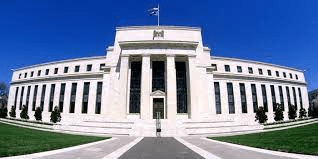
The Fed will soon make an extremely difficult decision, a decision which may very well spell bad news for the US economy either way.
Faced with surging inflation in the past year the Fed has been forced to take an aggressive stance, raising the interest rate from being near zero as recent as late 2021 to a whopping 4.5% now.
However after a year of fighting inflation, it has been clear that the hikes so far have had a rather disappointing effect on inflation, with the inflation rate remaining far above the Fed’s target of 2%.
The continuing strength of the job market in spite of the tightening has provided a solid foundation for the Fed’s continued hawkishness, but right now it is far less certain whether this hawkishness can be sustainable for much longer without causing economic contraction.
2023 was already forecasted to be a subpar year for the US economy, as opposed to the boom times of 2021 and the middling but still solid 2022. Then came the massive tech layoffs and the collapse of Silicon Valley Bank and Signature Bank, as well as the close calls many other large banks, like Credit Suisse and First Republic, had with collapse.
Continuing the rate hikes will only put more pressure on the already tenuous situation in the finance and tech sectors. Yet the fight against inflation remains far from over and halting it would mean that costs for ordinary Americans would continue to rise at a rapid rate.
However, the downward trend of the inflation rate may signal that the Fed has been making meaningful, albeit slow, progress in fighting inflation. This may provide somewhat of a rationale for the Fed to hold off on the rate hikes for now. Whether the Fed will end up taking that route is another story, however. The Fed may very well conclude that its mandate to fight inflation is more important than its mandate to keep the economy growing since the economy has remained in a state of growth regardless of the Fed’s hawkishness and that inflation rates remain unacceptably high.
There is also a school of thought that says that the Fed must force a recession to deal a meaningful blow to inflation (1). Which is a school of thought that investors should be extremely wary of. If the Fed somehow becomes more hawkish than it currently is, actively trying to force a recession, we might end up with something more akin to 2008, given the state of the financial system right now (2).
Yet most economists right now agree that the Fed may hike interest rates, albeit more slowly than it did in the past. (3) If this ends up being true, then it means that the state of the banking industry has not daunted the Fed very much. In that case, set your clocks back 15 years; it will be fitting.
 Jason's World
Leave a comment