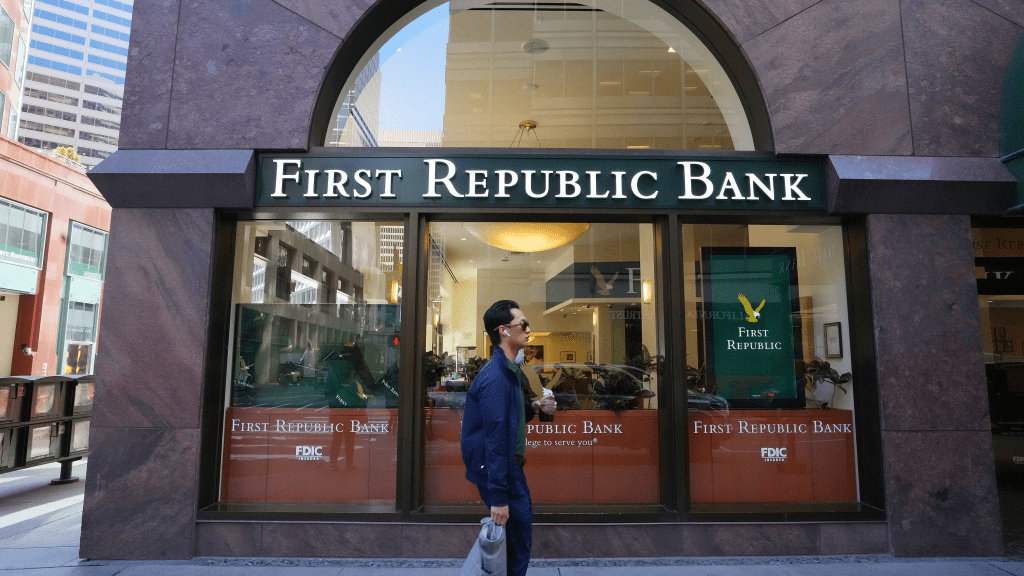
Earlier today, the FDIC seized what was the nation’s 14th largest bank, First Republic, and is in the process of selling its assets to JPMorgan.
This is the third bank failure this year has seen, which has exceeded the failure of Silicon Valley Bank, and is the second largest bank failure in the US in all of history.
However, what is notable right now is the lack of market reaction to the collapse, as well as previous bank collapses in March. After all, the cumulative size of all the bank failures this year (more than $500 billion) has exceeded the cumulative size of all the bank failures in 2008, during the depths of the financial crisis, even when adjusted for inflation.
When Silicon Valley Bank fell in March, stocks fell for a rather brief period of time and then quickly bounced back to where they were before the collapses happened. And when it became clear that First Republic would collapse, stock markets tumbled, too. But they recovered it all on Thursday and Friday of last week.
It appears that bank failures aren’t having the broad impact on markets that they used to have. Why?
The Big Banks: No Longer Villains, But Peacekeepers
Much has been made of “too big to fail” by experts and political candidates. As Senator Bernie Sanders likes to say, “too big to fail means too big to exist”. But some of the biggest banks, like JPMorgan, received credit for stepping in to resolve recent bank failures as of late.
“This is changing the narrative on big banks. Big banks are no longer viewed as a source of systemic risk. They’re viewed as stabilizers.” said Mohamed El-Erian, chief economic advisor of Allianz, on CNBC’s “Squawk on the Street”. “They’ve been viewed as diverse enough to absorb.”
This view is self-enforcing, to an extent. As investors place their trust in big banks like JPMorgan to not only be stable but also be strong enough to rescue the financial industry as a whole when troubles arise, they would be less likely to pull their deposits with JPMorgan, if they have any.
Excellent News From The Tech Sector
The exceptionally good news from the technology sector last week also played a role in the stock market’s resilience. Meta, once considered to be in trouble during most of the past year, posted an unexpected increase in sales and an improvement in guidance on Wednesday. Amazon also reported better-than-expected sales revenues on Thursday, however the good news was tempered by projections of slowing cloud revenue growth.
Here’s something to consider: The market cap of Amazon and Meta combined are more the eight times the size of First Republic. As large as First Republic was and as crucial as the banking industry is to the health of the economy, the bank failure of last week was ultimately overshadowed by good news coming from much bigger companies because ultimately, First Republic is only the 14th largest bank in the US. In comparison, Washington Mutual was the sixth-largest bank in the US when it failed.
While the risk of further crises in the banking industry cannot be ruled out completely, at least for now, the health of the nation’s biggest banks and the resurgence of the tech industry provides a powerful dose of optimism for investors as a whole.
 Jason's World
Leave a comment