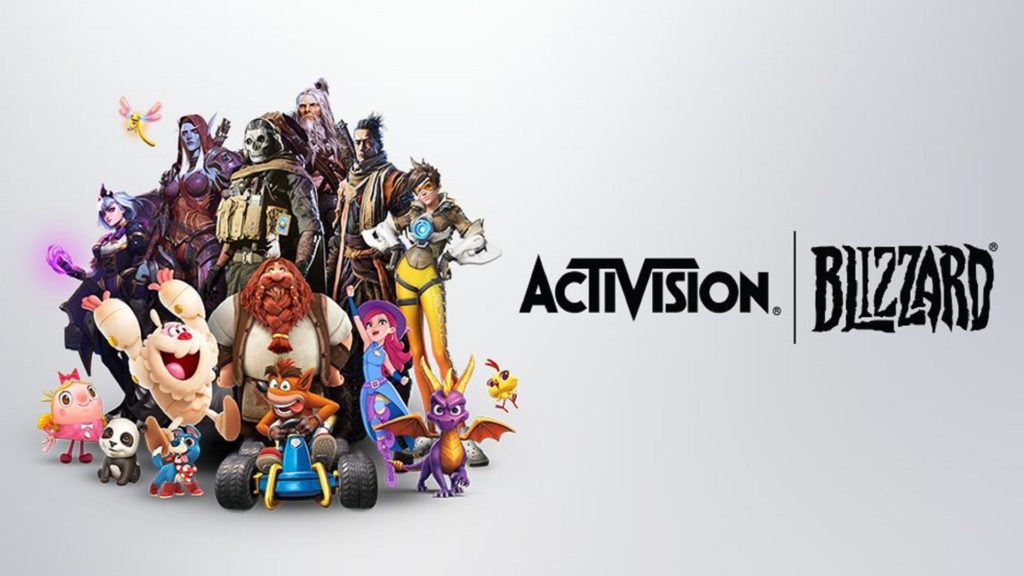
The game is on for Activision investors.
The saga surrounding the largest merger in the tech industry-valued at $69 billion-is about to reach its climax as soon as this week.
In early 2022, Microsoft announced that it intended to buy Activision Blizzard for $69 billion, or $95 per share. The acquisition would give Microsoft ownership of many popular franchises, like Call of Duty, StarCraft, and Candy Crush.
This will further strengthen Microsoft’s position in the world gaming industry. Microsoft already owns Minecraft, the best-selling video game of all time, through Xbox. Microsoft also has 27.3% of the world console gaming market, and around 60-70% of the cloud gaming market. And this is why Microsoft’s competitors are hellbent on stopping the deal from happening. If the deal went through, Microsoft’s ownership of many popular cloud games would be a knockout blow to other players in the cloud gaming industry.
Many governmental and private players have pulled out all the stops to try and kill the deal. Sony, a main rival of Microsoft in the gaming industry, has lobbied the FTC to kill the deal in the US. The UK has blocked the deal from going through, even though many other countries, like Japan and China, have approved them. The approval of the deal in Japan is notable because of Japan-based Sony’s staunch opposition to the deal.
The FTC under the Biden administration has taken a more aggressive approach to antitrust enforcement. A record high amount of merger complaints were filed in 2021 and 2022. This makes the blocking of the deal in the US a little less surprising, and it explains why Activision’s share price hasn’t gotten close to $95.
The blocking of the deal in the UK and the impasse in the US are the biggest impediments to the successful closure of the deal because 60% of Activision’s revenue comes from the US and the UK. Without the approval of the deal in these two countries, Microsoft would be missing out on a stronger position in the video game industry in two important markets, and Activision would lose many its operations outside of the UK and US without enjoying the potential benefits of becoming a part of Microsoft. Even though Activision would receive a hefty compensation package of $3 billion, the failure of the acquisition would cause a steep drop in Activision’s stock-after all, it was trading at only $65 a share before Microsoft announced its intention to buy Activision.
Let’s take a deeper dive into the case that the FTC has brought against Microsoft. Judge Jacqueline Scott Corley of the District of Northern California is currently oversees the case. Recently, Ms. Corley disclosed that her son currently works at Microsoft. Watchdogs have insisted that Ms. Corley recuse herself from the case, despite Corley insisting that her son does not work in the gaming division.
Aside from the Microsoft-Activision case, Corley has taken a more aggressive stance on antitrust enforcement. Earlier this year, Corley ruled against Qualcomm in the latter’s bid to block a consumer’s antitrust case over its exclusive chip licensing practices. And in 2021, she refused to dismiss a consumer class action lawsuit against alleged anti-competitive activities at SK, a South Korean oil company.
The fact that this is a much larger case with much bigger implications (this deal will give Microsoft pretty much total control over the cloud gaming market and potentially restrict many popular video games from other popular consoles), will probably cause Judge Corley to rule against the FTC. However, the details of the hearing complicate this notion. Judge Corley appeared to be skeptical of the FTC’s case that Microsoft’s acquisition of Activision will hurt consumers.
The overall takeaway is that this case is very much up in the air with strong evidence pointing towards Judge Corley siding with either party in this case. This explains why open interest for calls and puts far away from Activision’s current price are much higher-investors are pursuing straddle or strangle strategies in order to profit if the case goes either way. This phenomenon is especially evident for contracts expiring on July 21, three days after the deal is supposed to be closed.
Directly buying or shorting the stock itself, however, is not recommended given the ambiguity surrounding Judge Corley’s leanings in the case. The best opportunity with regards to Activision lies within strategies that seek to profit from major movements in the stock without regards as to whether that movement is up or down.
 Jason's World
Leave a comment