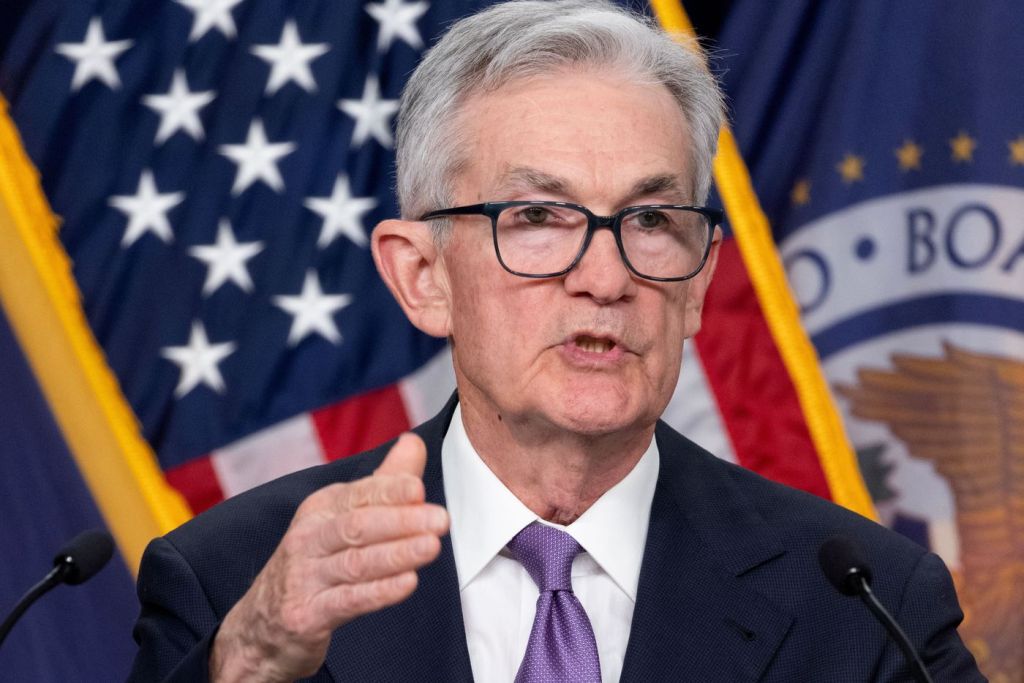
Federal Reserve Chairman Jerome Powell. (Source: Michael Reynolds/WSJ)
The Federal Reserve is believed to be ready to unwind some of the pressure it put on the stock market and the economy throughout the past three years.
The Fed announced in its last meeting that it expects to be able to reduce rates 3 times in 2024 in order to ease up pressure on the economy as the Fed’s fight against inflation reaches its conclusion.
Recent inflation reports for the month of November suggest that inflation has further reduced for the month to 3.1%, further down from 3.2% in October, which is in line with expectations. Energy prices mainly contributed to the reduction in inflation, while food prices and housing prices continue to drive inflation upwards. A recent decline in mortgage rates, however, could put upward pressure on housing demand.
The slowdown in the inflation rate was a far cry from what investors had hoped to see given that inflation fell slightly below 3% during the summer, but general inflation trends “remain favorable”, said Mr. Ian Shepherdson, chief economist at Pantheon Macroeconomics. The Fed’s decision to begin reducing rates is a strong indicator of its belief that inflation is on a steady path to 2%.
Though Mr. Powell has outwardly maintained a hawkish tone, as evidenced by his claim after Wednesday’s FOMC meeting that “we still have a ways to go” and “no one is declaring victory” over inflation, the Fed’s gestures signal its belief that the necessity to maintain high interest rates has waned. Even Mr. Powell has suggested that interest rates are unlikely to increase from their current levels.
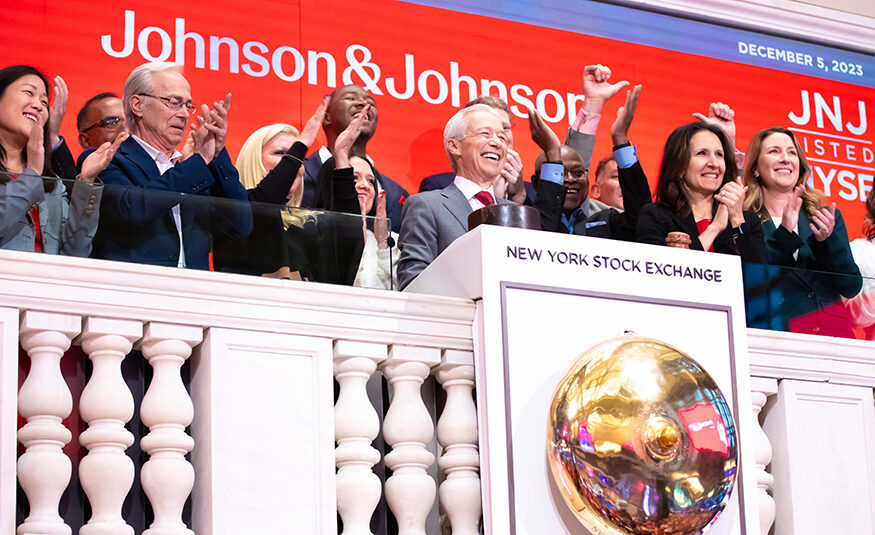
The NYSE opening bell ringing ceremony on Dec. 5, 2023. (Source: NYSE)
Though there was an apparent disconnect between the Fed’s policy direction and some of Mr. Powell’s remarks, markets reacted positively to last week’s Fed meeting, as investors simply interpreted Mr. Powell’s remarks as him being more hawkish than the Fed as a whole, something that has occurred during past Fed meetings. The Dow Jones has increased to an all-time high of more than 37,000, and the other two major indices, the S&P and the Nasdaq, also rose to 52-week highs in the days following the Fed meeting.
Bond yields, a significant indicator of borrowing costs, also fell sharply. After peaking at 5% in late October, the 10-year Treasury rate has gradually fallen to less than 4% over the course of a month and a half: it dropped from 4.2% to 3.852% during the past 2 months, reflecting optimism that interest rates will finally come down. Falling with bond yields were rates on corporate debt-long-term Baa-rates corporate bonds by Moody’s fell to 5.53%, about 1.3% below previous highs set in late October.
The overall direction of the market recently reflects a sharp reversal from a month and a half ago, when higher yields erased a large part of the market rally that was spurred by AI enthusiasm in the summer, fueled in part by shocks related to the Israeli-Palestinian war. These fears now appear to be a distant memory in the eyes of investors. Now, optimism is increasing that the Fed can manage to pull off a soft landing without pushing the economy into a recession, which the Fed has failed to do many times in the past.
This also reflects the reversal that the Fed has been engaged in regarding the future of the interest rate environment. The median projection of overnight rates of 4.7% following the most recent meeting is a far cry from the 5.1% that was projected in September. However, this is still a ways off from projections earlier in the year that suggested as much as six rate cuts by the end of 2024.
The market’s performance throughout this year, in general, was very far from what most people had expected at the beginning of the year. Economists predicted a moderate to severe recession in Europe, a slight recession in the U.S, and historically slow growth in China. Only one of these came to pass as China’s GDP growth continued to lag behind prepandemic norms.
A multitude of factors can be credited for this surprise. For example, there is the hypothesis that as the supply chain disruptions from 2022 began to ease, it was natural that inflation would return to normal. This is used to argue that the Fed has overdone its rate hikes and now have the opportunity to conduct rapid rate cuts. But the pace at which the Fed plans to pivot remains slow, at least compared to forecasts earlier in the year. The expedited rate cut schedule predicted earlier in the year is because of investor euphoria regarding rapidly decreasing inflation in the summer.
Another reason would be that many companies were not as hurt by the increase in rates as many expected because they locked in funding while interest rates were still low. Companies like Microsoft, for example, enjoy the benefits of fixed borrowing cost while they earn more interest as the Fed increases interest rates. Investment-grade companies, on average, have generally issued longer-lasting fixed rate bonds than speculative-grade companies.
The impact of the banking crisis was also less than what was feared, as the Fed stepped in to stop a sharp drop in money supply that was the result of rate hikes, by relaxing the terms for lending. This managed to keep money flowing within the economy and avoid a wider crisis despite continued interest rate pressure.
There remain latent risks within the community banking sector, however. Many community banks are still seething from the pressure put on them by the recent Fed hiking cycle, and they have yet to recover. A bank serving rural Texas has increased its holdings of Treasurys amidst a decrease in loan requests amidst the pandemic, and now it is left with a major loss from depreciated Treasurys. Though Treasury rates have declined massively at the end of the year, only time will tell whether these wounds would be able to fully heal.
There are also other signs that a recession may be on the way. Private services jobs-in transportation, leisure and hospitality-saw much slower hiring compared to last year. In November of 2023, it added only 22,000 new jobs compared to 92,000 in November 2022. These sectors are worth paying more attention to because of their sensitivity to economic downturns.
 Jason's World
Leave a comment